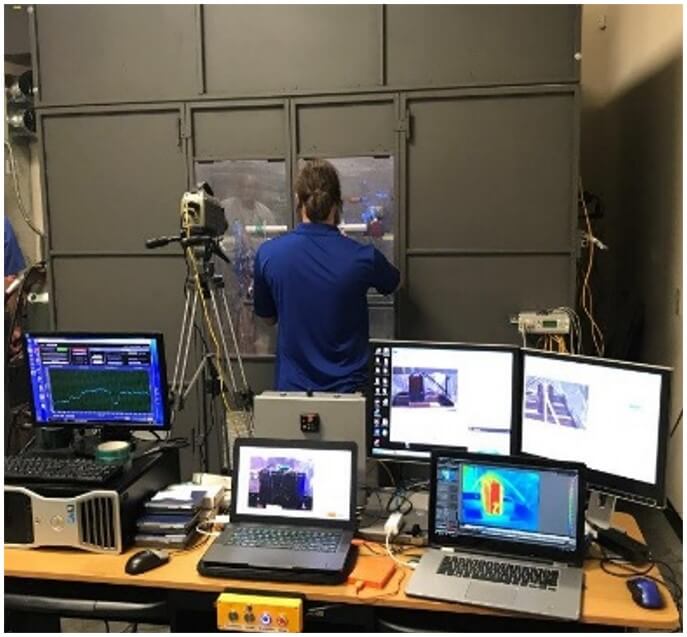
Thermal runaway containment is a core focus of the G27 testing protocol.
Gas and flame suppression testing evaluates packaging response to off-gassing and ignition risks.
Structural integrity testing assesses performance under vibration, impact, and pressure changes.
Multiple laboratories conduct identical tests to confirm reliability and consistency.
Round-robin testing ensures comparable results across different facilities.
Standardization challenges include varying battery chemistries and lab conditions.
Clear pass/fail criteria are being defined for manufacturer compliance.
“Slash sheets” introduce additional targeted test scenarios for specific hazards.
External fire exposure tests evaluate packaging resistance to direct flame conditions.
Sustained heat exposure tests measure performance under prolonged thermal stress.
Future expansions will address pouch and prismatic battery formats.
Advanced fire-resistant packaging and automated testing methods are under development.
The G27 testing framework is establishing globally accepted, performance-based safety standards for lithium battery transport.
Transporting lithium batteries safely is a global challenge, requiring strict regulations and robust testing. The SAE G27 Lithium Battery Packaging Performance Committee is at the forefront of this effort, working to develop and refine standardized lithium-ion battery packaging tests.
These tests aim to ensure that packaging solutions can contain thermal runaway, withstand fire exposure, and prevent hazardous failures during transport. But what exactly goes into the SAE G27 testing process?
Why Standardized Testing is Essential
Before the G27 standard, lithium-ion battery transport relied on varied and often inconsistent testing methods. This led to:
• Uncertainty about package safety.
• Discrepancies in results across different test labs.
• Inadequate regulations that didn’t fully address the risks.
The G27 standard seeks to eliminate guesswork and create repeatable, reliable safety tests for lithium-ion battery packaging.
The SAE G27 Testing Approach
The core SAE G27 tests focus on three key areas:
Thermal Runaway Containment – Ensuring that a battery failure inside the package does not spread or create external hazards.
Gas and Flame Suppression – Evaluating whether the package can withstand and contain the gas buildup and potential fire.
Structural Integrity Under Stress – Testing how packaging holds up under vibration, impact, and pressure changes in transit.
To ensure accuracy, the committee involves multiple testing laboratories, all conducting the same experiments to verify repeatability and reliability.
Challenges in Testing and Standardization
Creating a universal testing protocol has not been easy. The committee has had to:
• Account for differences in battery chemistries.
• Ensure that test environments are consistent across labs.
• Develop clear pass/fail criteria that all manufacturers can follow.
Through extensive round-robin testing, the SAE G27 Committee has refined its approach, ensuring that every lab produces comparable results.
The Role of Slash Sheets in Testing
To enhance testing accuracy, the committee has introduced “slash sheets”—additional test methods with focus including:
• External fire exposure – Can packaging withstand flames without causing battery failure?
• Sustained heat exposure – What happens when batteries are exposed to high temperatures for extended periods?
These tests help regulators determine whether a package is suitable for different transport conditions.
Future Directions in Lithium-Ion Battery Testing
As technology evolves, the committee will expand testing to include:
• New battery formats (pouch cells, prismatic cells).
• Stronger fire-resistant packaging solutions.
• Testing automation for faster, more accurate results.
The G27 testing process is revolutionizing lithium-ion battery safety by creating scientifically validated, globally accepted standards. With repeatable tests and robust packaging requirements, the industry can now ensure safer transport for lithium batteries worldwide.
Do you have questions about your company’s compliance? Schedule a quick call with our expert today.